
 EN
EN



Precision Motion Control in Servo-Controlled Cartoning Machines
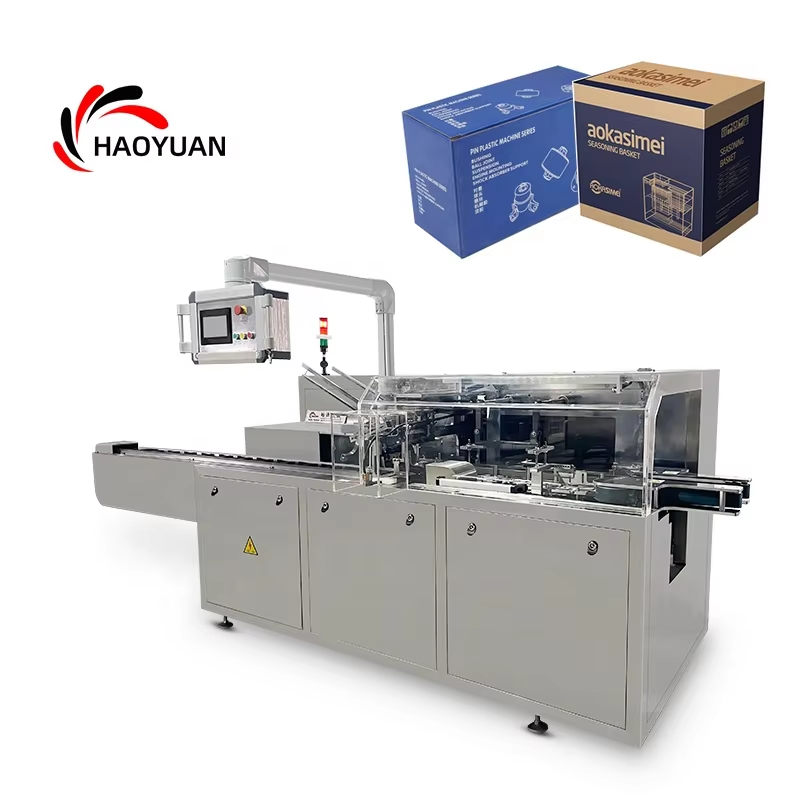
Position, Velocity, and Torque Control for High-Speed Cartoning Accuracy
Cartoning machines with servo controls reach amazing levels of precision because they handle position, speed, and torque all at once. This lets them place products exactly where needed even when running over 200 cartons each minute. The system adjusts torque on the fly to deal with variations in materials like different cardboard thicknesses from 12 to 24 points or changes in how sticky the glue is. At the same time, velocity profiles make sure the machine accelerates smoothly when folding cartons. According to Packaging Digest from last year, these three-axis systems cut problems with misaligned seals down to just 0.3%. Another big advantage comes from getting rid of those old mechanical cams. Without them, operators can quickly switch to new carton designs simply by updating software settings, which saves about four fifths of the time usually spent changing over equipment.
Closed-Loop Feedback Systems Achieving Sub-Millimeter Repeatability
Encoders with high resolution provide positional feedback down to 0.01mm for servo drives, which allows machines to correct their own movements and stay within about 0.2mm repeatability even when dealing with changing loads. The system works as a closed loop, constantly adjusting for things like worn belts, temperature changes, and differences in product weight of around 500 grams. It also fights vibrations by sending opposite signals to the motors at just the right time. This kind of accuracy matters a lot in making blister packs for medicines because if the seals aren't perfect, companies face expensive recalls. According to research from the Ponemon Institute back in 2023, one bad batch could cost manufacturers nearly $740,000 in recall expenses alone. And there's more good news too. The system spots problems before they happen, cutting unexpected machine stoppages by almost 92 percent across the board.
Stability Engineering: Load Handling and Disturbance Rejection
Real-Time Adaptive Control for Variable Product Sizes and Weights
Today's servo cartoners can adjust their motion settings within half a second or so when moving from one product type to another. Think about going from small 200 gram candy packages all the way up to heavy duty 800 gram medical kits. These machines still manage to place items accurately within just 0.2 millimeters of where they should go, and nobody has to touch any buttons or levers during this process. The smart control system actually stops those annoying paper jams that happen when sizes change suddenly. Plus it means there's no extra hardware needed for recalibrating everything manually. This makes running multiple different products on the same line much smoother overall for factory operations.
Rigid Frame Design, Vibration Damping, and Thermal Management
Stability is engineered holistically—spanning software, mechanics, and thermal design:
- Reinforced alloy frames withstand 15G shock loads during high-speed operation
- Passive vibration dampers absorb 90% of harmonic oscillations from adjacent equipment
- Active thermal regulation keeps servo motors below 45°C during continuous 24/7 production
Together, these features neutralize environmental stressors—including ambient temperature shifts and uneven conveyor surfaces—reducing unplanned downtime by up to 40%.
Servo Motor Integration Across Cartoning Functions
Camless Rotary Actuation for Forming, Filling, and Closing
The switch from mechanical cams to servo driven rotary actuators for tasks like forming, filling and closing cartons means manufacturers can finally achieve genuine camless operations. These systems come with software controlled motion settings that make it possible to quickly adapt when dealing with different carton shapes, materials that vary in stiffness, or specific sealing needs. The torque adjustments happen on the fly too, responding to changes in cardboard thickness or inconsistencies in adhesives without damaging products, all while keeping production speeds well over 200 cartons per minute. What makes this approach so valuable is how much faster it is to switch between different production runs. Companies report cutting down their changeover times by around 37% compared to older cam based equipment.
Synchronized Multi-Axis Coordination in Fully Automatic Cartoning Machines
The central control system keeps everything working together - those pick and place arms, conveyor belts that move at just the right intervals, and the closing mechanisms too - all within half a millimeter accuracy even when dealing with such different weights as tiny 50 gram sachets up to heavy 5 kilogram packages. These systems have built in encoders that constantly check what's happening and adjust on the fly whenever there are changes in how much weight is being moved around. The whole setup sits on sturdy aluminum frames specially designed with mounts that soak up vibrations so things stay aligned properly even at top speeds. All this coordination means fewer jams happening, cycles take about 22 percent less time overall, and machines keep running smoothly with downtime below 1% in places where strict regulations apply like pharmaceutical manufacturing and food packaging facilities.
FAQ
What is servo control in cartoning machines?
Servo control in cartoning machines refers to the use of servo motors to manage position, speed, and torque with high precision. This system enhances accuracy in product placement, especially at high speeds.
How does closed-loop feedback improve cartoning accuracy?
Closed-loop feedback systems utilize high-resolution encoders to provide real-time positional feedback for servo drives, enabling machines to correct movements and maintain repeatability even with variable loads.
Why is camless rotary actuation beneficial?
Camless rotary actuation uses servo-driven rotary actuators instead of mechanical cams, allowing for quick adaptations to different carton shapes and materials, and reducing changeover times by approx 37%.
How does real-time adaptive control handle product variations?
Real-time adaptive control adjusts motion settings automatically, allowing machines to accommodate different product sizes and weights seamlessly without manual intervention.