
 EN
EN



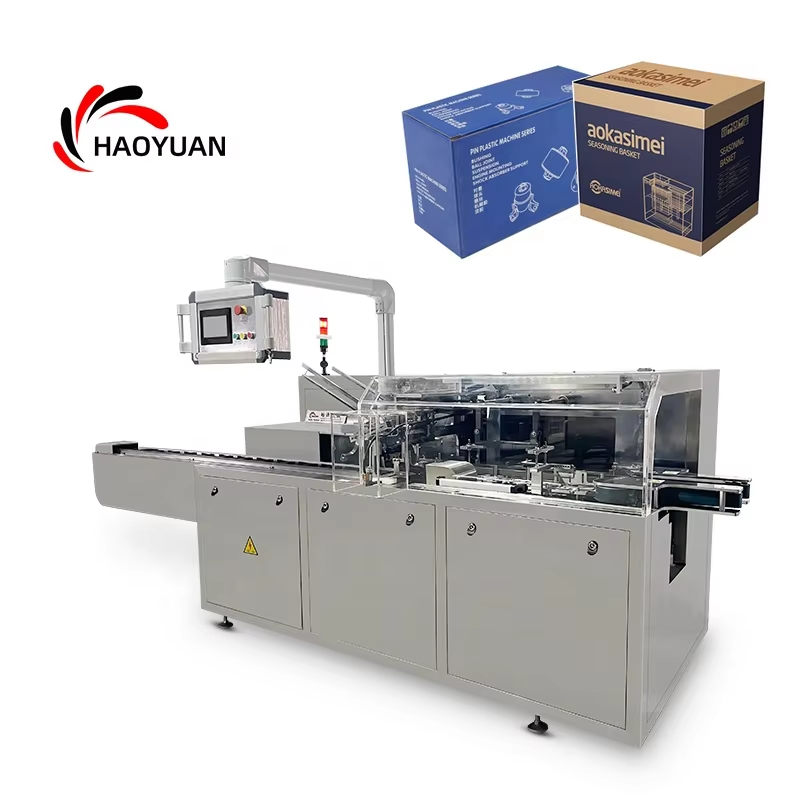
Baseline Throughput Gains from High-Speed Cartoning Machines
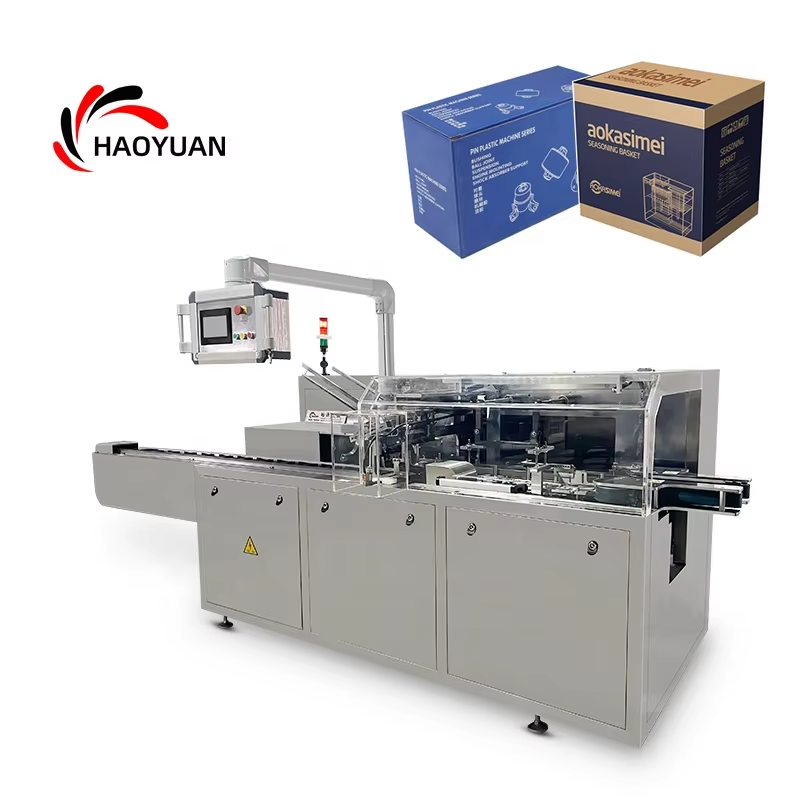
High-speed cartoning machines transform packaging lines by drastically increasing output. Where traditional systems manage 20–50 cartons per minute, modern solutions operate at 80–120+ cpm—delivering quantifiable uplift across FMCG, pharmaceuticals, and dairy processing. This speed advancement directly reduces unit costs and accelerates time-to-market for volume-sensitive industries.
Typical throughput uplift: From 20–50+ cartons/minute to 80–120+ cpm in FMCG, pharma, and dairy lines
The machines boost production rates through several key features including precision indexing that stops misfeeds, continuous motion design which cuts down on idle time, and adaptive control systems that adjust to different carton sizes. Looking at actual results from pharmaceutical manufacturing lines, we see around 78 percent improvement in how fast batches get completed once these machines are installed. Similar improvements have been noted across dairy processing and consumer packaged goods as well. When operations run this quickly though, bottlenecks tend to move around quite a bit. That means getting all parts of the production chain working together smoothly becomes absolutely critical if companies want to maintain those impressive performance levels over time.
OEE validation: Case study of Zhejiang Haoyuan HC-600 achieving 98.3% operational efficiency in high-mix dairy co-packing
Looking at how well equipment works day to day boils down to checking those OEE numbers. One big dairy packaging company hit 98.3% OEE running their Zhejiang Haoyuan HC-600 machine across three shifts straight. What made this possible? Their system has eyes everywhere for seal checks at 120 containers per minute, so nothing slips past unnoticed. When jams happen, smart tech kicks in within half a second to get things moving again. And switching between different product sizes? That takes only four minutes thanks to those quick-change parts. With all this going on, they managed to run 43 different products through the same line while still getting nearly perfect results on the first try. Real world proof that fast production doesn't have to mean lower quality when the right systems are in place.
Scalable Throughput Architecture Enabled by High-Speed Cartoning Machines
Modular, Lane-Based Scalability: Seamless Expansion from 30 CPM to 100+ CPM
Cartoning machines running at high speeds offer flexible production scaling thanks to their modular lane design. A manufacturer might start out with just one lane running around 30 cartons per minute, then later add another lane or even three lanes side by side to push past 100 cartons per minute without stopping production. These systems come with built-in synchronization features that keep everything moving at the same pace across multiple lanes, so folding, loading, and sealing operations stay consistent no matter how many lanes are active. The real advantage becomes apparent when companies need to scale up quickly. We've seen pharma companies boost their output by over 400 percent in just under two days using this method. Plants save money too since they don't have to replace entire production lines, cutting capital costs down about 40 percent and keeping valuable factory floor space intact. Plus, the modular setup lets manufacturers handle different product versions at the same time, which is absolutely essential for fast-moving consumer goods companies bringing out new seasonal products every few months.
Bottleneck Reallocation and System-Wide Efficiency Impacts
From cartoning bottleneck to upstream/downstream constraint: How higher speeds expose latent inefficiencies in fillers, labelers, or conveyors
High speed cartoning machines tend to shift rather than eliminate production bottlenecks. The moment these machines crank up from around 50 to about 120 cartons per minute, hidden problems start showing up everywhere. Upstream issues pop up first, like those pesky syringe fillers having trouble when viscosity changes unexpectedly. Downstream problems follow too, with labeling systems suddenly unable to keep pace at these higher speeds. What happens is that the faster cartoning eats away at the buffer time between processes, making small inconsistencies in how accurately things are filled or aligned stand out much more clearly than they used to. These tiny deviations that were once considered normal now become real headaches for plant managers trying to maintain quality standards.
The line-balancing imperative: Why isolated high-speed cartoner upgrades require holistic packaging line optimization
When companies install faster cartoners but ignore other parts of the production line, they often end up with disappointing results. One bottling facility saw this happen firsthand when they upgraded just one section. Even though their machines ran 140% faster, the actual improvement in output was only around 12 to 18%. Why? The problem turned out to be those old case packers further down the line that couldn't keep up. These misaligned systems basically wiped away about two thirds of what should have been gained from the upgrade. To really boost production speed, manufacturers need to coordinate everything from the beginning fillers all the way through quality checks and finally to the palletizing equipment at the end. And this coordination has to happen within the same control system architecture. If any part of this chain isn't working properly, the whole operation slows down. A broken conveyor belt somewhere will bring everything else to a crawl no matter how fast other sections are running.
Seamless Integration for End-to-End Throughput Continuity
Real-time synchronization via PLC and EtherCAT: Coordinating high-speed cartoners with vision inspection, sealers, and labeling systems
Packaging lines really hit their stride when those fast cartoners work in lockstep with everything else going on around them. Most plants rely on PLC networks and EtherCAT protocols to keep things running smoothly at the millisecond level between forming machines and other key operations like checking product quality through cameras, applying tamper-proof seals, and getting labels just right. When these systems talk to each other in real time, it stops those tiny stoppages that add up fast. Take a look at what happens when there's even half a second delay per carton at 120 units per minute - efficiency drops by 12%, which hurts bottom lines pretty badly. Smart factories have started adopting modular setups with standard connections so different machines can plug into each other without wasting time during setup. Once speeds go past 120 cartons per minute, nothing short of perfect timing works anymore. If the label applicator isn't synced properly with the sealer downstream, all those extra bucks spent on faster equipment just vanish into thin air. What we see in practice is a constant stream of cartons moving straight from being made, filled, and sealed right onto pallets, no waiting areas needed and definitely no workers having to step in manually anywhere along the way.
FAQ
What is the primary advantage of high-speed cartoning machines?
High-speed cartoning machines significantly increase production rates, reducing unit costs, and accelerating time-to-market for industries such as FMCG, pharmaceuticals, and dairy processing.
How do modular lane-based designs benefit manufacturers?
Modular lane-based designs allow manufacturers to expand production capacity seamlessly without halting production, thereby saving on capital costs and factory space.
What challenges can arise from high-speed automation implementations?
High-speed automation can expose latent inefficiencies in upstream and downstream processes, such as fillers and labelers, which may require holistic line optimization to maintain quality.
What role do PLC networks play in cartoning machines?
PLC networks, along with EtherCAT protocols, help coordinate high-speed cartoners with other systems, ensuring smooth, real-time integration across the packaging line.