
 EN
EN



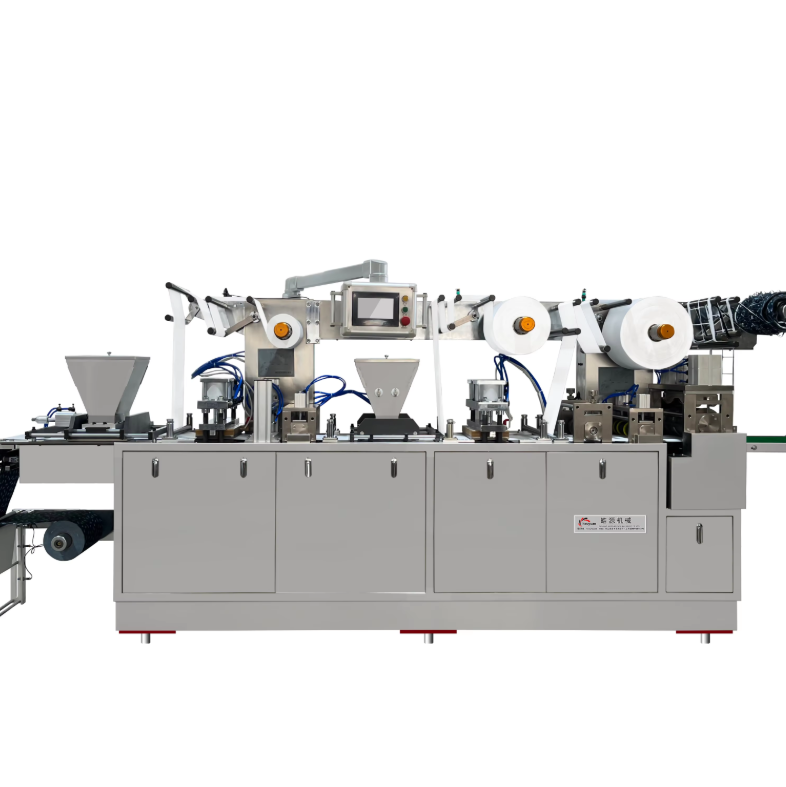
Where Insole Foot Warmers Production Costs Actually Hide
Reducing production costs for insole foot warmers does not start with buying cheaper raw materials. It starts with understanding where waste, downtime, and labor quietly accumulate along the line. A typical insole foot warmers production line includes powder dosing, forming, sealing, cutting, inspection, and pouch packaging. Each station can create small losses that multiply over thousands of units. For example, if the heating powder dose is slightly above the target, material cost rises. If the seal is too weak, the product gets rejected after packaging. If the line takes too long to change sizes, labor hours pile up. These are not dramatic failures. They are slow leaks that make a product less competitive over time.
Precise Dosing Turns Material Waste Into Margin
The heating powder inside insole foot warmers is a cost-sensitive material. It usually contains iron powder, activated carbon, water, and salt. Too little powder means the product does not warm properly. Too much powder raises direct material cost and can make the finished item too thick or stiff. A dosing system with automatic feedback helps keep the fill weight inside a narrow range. In one contract packaging project in Zhejiang, a production team found that a worn auger tip was overfilling each warmer by roughly 0.4 grams. That small drift did not trigger alarms, but it added up to several kilograms of extra powder every day. Replacing the worn part and tightening the control limits brought material usage back without changing the formulation. A small correction on the line was more effective than negotiating a lower powder price.
Online Inspection Prevents the Most Expensive Rework
Rework is one of the costliest activities in packaging. Once a finished insole foot warmer is sealed inside a retail pouch, opening and repacking it is rarely worth the labor. That is why inline inspection is so valuable. Checkweighers catch fill weight problems before the pouch is sealed. Metal detectors and vision systems find contamination and edge defects before the product enters the carton. A batch release plan based on ISO 2859-1 or a similar sampling standard helps the quality team decide how many samples to pull for temperature testing. The goal is not to inspect every single warmer, but to catch process drift early enough to avoid sorting an entire batch. When inspection is placed at the right points, fewer bad units reach the end of the line, and fewer good units get scrapped by mistake.
Faster Changeover Keeps Small Orders Profitable
Insole foot warmers often come in multiple sizes, thicknesses, and pouch formats. If a factory runs three or four sizes per week, changeover time becomes a hidden production cost. Every minute spent adjusting rails, sealing jaws, or cutting dies is a minute the line is not producing. A well-designed line uses quick-change tooling and clear setup marks so operators can switch from one product to another without trial and error. The table below compares common cost factors between a semi-automatic setup and a fully integrated automatic line.
| Cost Factor | Semi-Automatic Setup | Integrated Automatic Line |
|---|---|---|
| Powder fill accuracy | Manual checks, wider variation | Automatic feedback, narrower variation |
| Labor per shift | Higher, more direct handling | Lower, more supervision focused |
| Changeover time | Longer, more mechanical adjustments | Shorter, quick-change tooling |
| Inline rejects | Caught later, more rework | Caught earlier, less rework |
| Packaging flow | Batch collection, offline pouch filling | Continuous flow into pouch and carton |
Energy Use and Maintenance Are Easy to Overlook
Energy cost rarely shows up on a product quote, but it affects the total operating cost. Heating plates, compressed air, and vacuum systems all consume power continuously. A line that uses idle mode or automatic standby between batches wastes less energy than one that keeps every station fully powered. Maintenance follows the same pattern. Worn belts, dirty sensors, and uncalibrated temperature controllers force the line to run slower or produce more rejects. Preventive maintenance is not just about avoiding breakdowns. It keeps the machine running close to its intended settings, which keeps material consumption and energy use predictable. The cheapest production day is usually the one with no surprises.
Integrating Packaging Reduces Handling Steps
A significant portion of production cost comes from moving unfinished product between machines. When the forming, sealing, and packaging stages are separated, operators have to collect trays, move them to another line, and reorient the product for pouch filling. An integrated line for insole foot warmers reduces those handling steps. The finished warmer moves directly into a pouch filler, then through a checkweigher, and finally into a cartoning or case packing station. Fewer transfers mean fewer chances to drop, damage, or misalign the product. It also reduces the number of people needed between stations. The savings show up gradually, but they are real, especially when production volume stays high.
For manufacturers that want to control costs without compromising product consistency, the production line itself is a major lever. Haoyuan has long focused on packaging and forming machinery that supports this kind of stable, integrated operation. The company’s range includes vertical packaging, pillow-type packaging, warm-paste blister packaging, and box packing machines. That allows an insole foot warmers line to be matched with the right sealing, inspection, and packaging stages from the start. When the equipment works as one connected system instead of isolated machines, the small daily losses become easier to see and easier to eliminate.