
 EN
EN



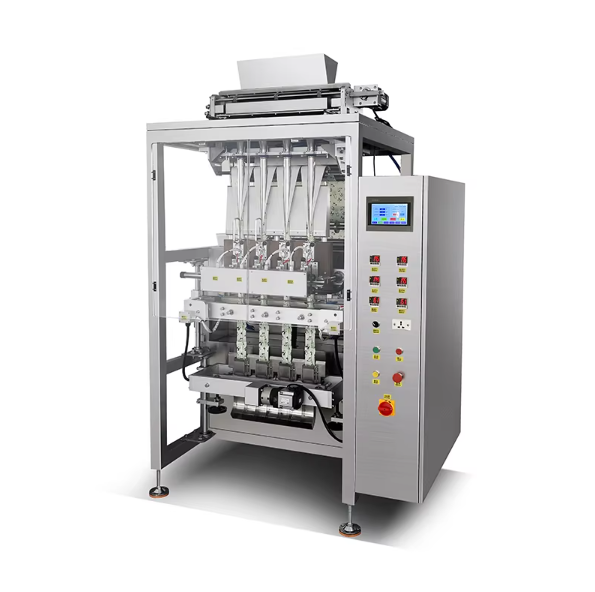
Equipment Price Is Only the Starting Point
Many buyers start by asking for the price of a knee warm patch production line and stop there. That number matters, but it is not the whole cost picture. A complete estimate has to include installation, commissioning, operator training, spare parts, and the supporting utilities. In one project in Zhejiang, a factory compared two line quotes that differed by only 8 percent. The lower-priced line required longer changeover and more frequent manual adjustment. Over six months, the extra labor and rejected material cost more than the initial saving. That is why experienced purchasers look at total cost of ownership rather than just the machine price.
Core Process Stations Drive the Main Equipment Cost
A knee warm patch production line usually includes powder mixing, dosing, forming or sealing, cutting, inspection, and packaging. The dosing and sealing stations often determine the price because they directly affect product quality. A volumetric filler may be cheaper, but an auger filler with automatic feedback keeps fill weight within a tighter range. That reduces powder waste and returns the investment through lower material cost. The sealing method also matters. Ultrasonic sealing can be more expensive up front than heat sealing, but it may use less energy and produce fewer rejects on thin nonwoven materials.
Automation Level Changes Labor and Space Requirements
The degree of automation has a large impact on operating cost. A semi-automatic line needs more operators for tray loading, visual checks, and manual transfer between stations. A fully automatic line integrates feeding, forming, inspection, and pouch packaging. The initial cost is higher, but the labor requirement per shift is lower. The table below compares typical cost factors for three automation levels.
| Cost Factor | Semi-Automatic Line | Automatic Line | Fully Integrated Line |
|---|---|---|---|
| Initial equipment cost | Lowest | Medium | Highest |
| Operators per shift | 4 to 6 | 2 to 3 | 1 to 2 |
| Material waste | Higher due to manual dosing | Medium | Lower due to feedback control |
| Changeover time | Longer | Medium | Short with quick-change design |
| Floor space | Smaller footprint | Medium | Larger but fewer handling paths |
Supporting Utilities Are Easy to Forget
The production hall needs compressed air, power capacity, and sometimes a dehumidification system for the heating powder. These items do not appear in the machine quote, but they affect the total project cost. A knee warm patch production line may also need a dust collection system if the powder mixing area is not sealed. If the factory is in a humid region, moisture control becomes more important because the powder can activate too early. Buyers should ask the equipment supplier for utility consumption data before finalizing the budget.
Using Target Output to Reverse-Engineer the Estimate
A practical way to estimate the cost is to start with the required daily output. If the target is 100,000 patches per day on a single shift, the line needs a certain cycle rate, web width, and packaging speed. That determines the equipment class and the number of operators. A machine with a theoretical output much higher than needed may look attractive, but if the product range includes multiple sizes, changeover time will reduce the actual output. A rule of thumb from packaging engineering is to plan for 75 to 85 percent of the theoretical rate when estimating real daily production. This avoids underestimating the number of lines needed.
Quality Standards Add Cost but Prevent Bigger Losses
A reliable cost estimate includes quality control equipment. Checkweighers, metal detectors, and temperature testers are not optional for a product that touches the skin. Standards such as ISO 2859-1 provide a sampling framework to decide how many finished warm patches to test per batch. Skipping this equipment may reduce the upfront cost, but it increases the risk of shipping a bad batch and losing a customer. The cost of one recall is usually much higher than the price of an inline checkweigher and a simple vision system. Quality equipment should be considered part of the production line, not an extra.
Getting a More Realistic Number from the Supplier
When requesting a quote for a knee warm patch production line, buyers should provide clear product dimensions, material structure, target speed, and packaging format. Missing details lead to assumptions that can move the price up or down. A supplier with experience across pouch packaging, pillow-type machines, and warm-paste blister packaging can help identify which stations are necessary and which can be simplified. Haoyuan has built its equipment range around this kind of practical configuration work. By matching the line to the real product instead of a generic specification, the estimate becomes more accurate and the final operating cost easier to control.
Table of Contents
- Equipment Price Is Only the Starting Point
- Core Process Stations Drive the Main Equipment Cost
- Automation Level Changes Labor and Space Requirements
- Supporting Utilities Are Easy to Forget
- Using Target Output to Reverse-Engineer the Estimate
- Quality Standards Add Cost but Prevent Bigger Losses
- Getting a More Realistic Number from the Supplier