
 EN
EN



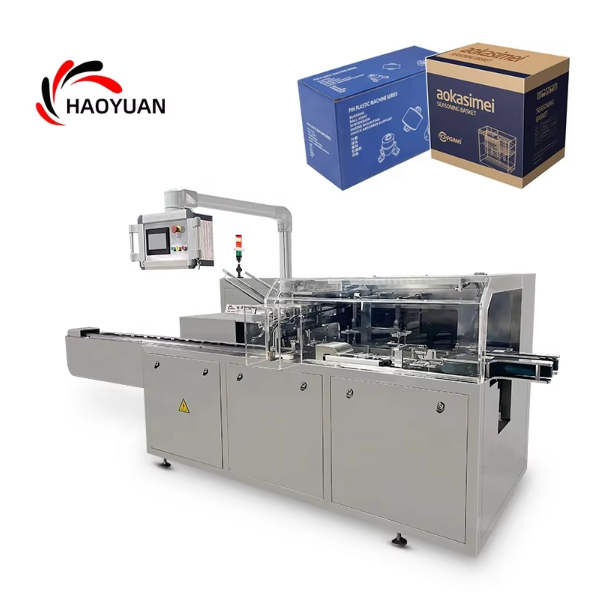
Carton Packing Machine Basics: What Actually Fits
A carton packing machine loads products into preformed cartons or forms cartons from flat blanks and then fills them. The machines work best when the product has a stable shape, a predictable orientation, and a surface that does not jam easily in the transport system. That sounds obvious, but many packaging projects run into trouble because the product is just irregular enough to slide, flip, or wedge inside the carton. Typical candidates include blister cards, pouches, tubes, small boxes, jars, and individually wrapped items. The carton itself also matters. Tuck-end cartons, reverse tuck cartons, and snap-lock bases behave differently in automated lines. A reverse tuck carton is usually easier to open and close at speed, while a snap-lock base can carry more weight but needs a stronger closing station.
Why Rigid and Semi-Rigid Products Work Well
The easiest products to automate are rigid or semi-rigid. Blister packs, plastic trays, small bottles, and pre-bagged items hold their shape. The carton packing machine can push them into the carton without deforming the product or damaging the packaging. Soft or loose products are more demanding. Loose tea bags, face masks, or thin pouches often need special tooling or vacuum assist to stay in position. That does not mean soft products cannot be cartoned, but the line design has to account for product movement. In many cases, a semi-automatic loading station handles the irregular items, while the automatic section takes care of carton forming, closing, and coding.
The Steam Eye Mask Production Line Connection
A modern steam eye mask production line often ends with a carton packing step. The individual eye mask is usually sealed in a foil pouch first, because the heating powder inside must stay fresh and dry. Then a group of pouches is loaded into a printed carton for retail display. This is a good example of a product that suits automated cartoning when the pouch is flat and consistent. The flat pouch shape allows the machine to stack, count, and push groups into the carton reliably. When the pouch has a simple rectangular profile and a sealed edge that does not curl, the carton packing machine can run continuously with a low reject rate. That connection between the steam eye mask production line and the cartoning stage is one reason why packaging machinery buyers often consider both pieces of equipment together.
Product Characteristics That Reduce Changeover Pain
Products with consistent dimensions and a limited range of carton sizes are friendlier to a carton packing machine. The machine needs to be adjusted whenever the product length, width, height, or carton style changes. Quick-change features help, but they cannot eliminate the fundamental issue. If a factory runs ten different carton sizes on the same line every week, downtime will add up. That is not a machine failure. It is a planning challenge. The table below compares product types and their typical compatibility with automatic cartoning.
| Product Type | Typical Cartoning Compatibility | Main Challenge |
|---|---|---|
| Blister pack or carded item | High | Inserting without scratching surface |
| Flat foil pouch | High | Keeping pouch flat during stacking |
| Tube or small bottle | Medium to high | Orientation control |
| Loose or irregular item | Low to medium | Product movement before insertion |
| Pre-bagged product | High if bag is sealed flat | Consistent bag thickness |
Carton Styles and Loading Patterns That Matter
Carton style influences line speed and product protection. A tuck-end carton is common for lightweight personal care and pharmaceutical products. A crash-lock bottom carton supports heavier or denser products. The loading pattern also matters. Horizontal loading works well for flat pouches and blister packs. Vertical loading suits bottles, jars, or products that must stand upright. Top-load cartoning can handle more delicate items because gravity assists the insertion. Each pattern requires different tooling. The carton erector, conveyor, and closing unit all have to match the carton style. In one medical device packaging project in Zhejiang, a team discovered that a carton board with a higher recycled fiber content curled slightly after the coding station. The curl caused intermittent jams at the carton closing unit. Switching to a board with better flatness and adjusting the humidity in the packaging hall solved the problem without slowing the line.
When a Carton Packing Machine Is Not the Best Choice
Automatic cartoning is not always the right answer. Very low volumes, frequent carton size changes, or extremely fragile products may be better handled with semi-automatic stations. Some products also need manual inspection before cartoning, especially when visual defects are hard for a vision system to catch. The key is to match the machine to the actual product range, not to force every product into the same automation strategy. Industry guidance such as ISO 14100 for packaging machinery safety and basic GMP principles for packaging environments can help a buyer evaluate the line. These references do not tell you which machine to buy, but they provide a framework for risk assessment and operational planning.
For manufacturers that produce multiple packaging formats, a supplier with practical experience across pouch filling, flow wrapping, and box packing can make the project easier. Haoyuan has built its packaging machinery around that kind of integrated thinking. The equipment portfolio covers pouch packaging, vertical and pillow-type machines, and box packing machines, so a steam eye mask production line can be matched with a suitable cartoning stage without forcing incompatible equipment into the same line. That kind of coordination often matters more than any single machine specification.