
 EN
EN



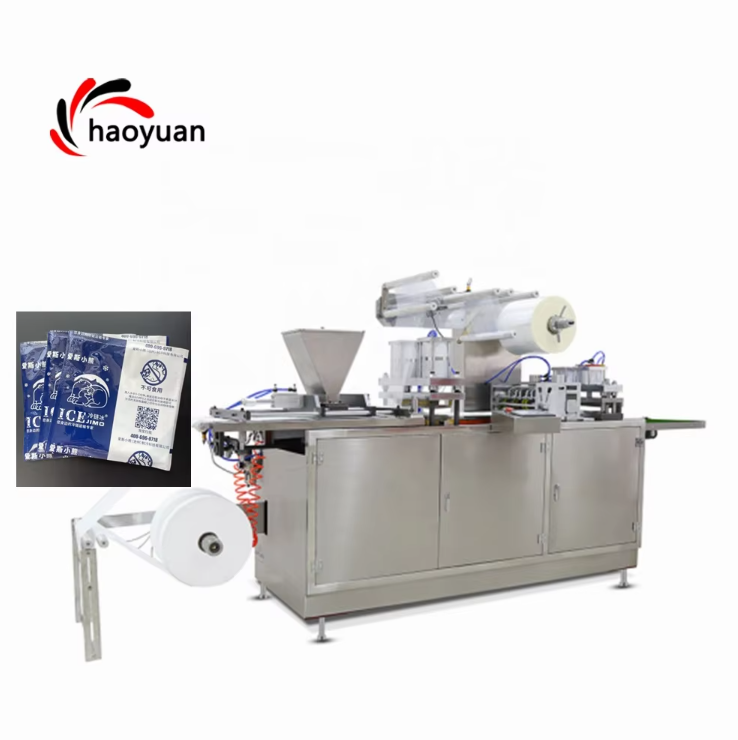
Why Film Handling and Tension Control Set the Pace
An ice bag machine starts with rollstock film, usually LDPE or a multi-layer structure that needs to stay flat and wrinkle free. If the film tension drifts, the pouch length changes, and the sealing area moves. That leads to misaligned seals and wasted film. Efficient lines use automatic tension control with sensors that adjust the unwinding speed. In one facility in Zhejiang, a cold pack manufacturer found that a slight variation in the film roll brake caused the pouch width to shrink by nearly one millimeter every few hundred cycles. The operators kept adjusting the cutting station until the real problem was found in the unwinder. Once the tension loop was tuned, film waste dropped and the machine held its target length.
Forming the Pouch Without Wasting Material
The forming section shapes the flat film into a tube or a three-side sealed pouch. The collar and forming shoulder must match the film width and thickness. If the forming set is worn or misaligned, the film can fold unevenly and create weak spots near the seal. High-efficiency ice bag machines use quick-change forming sets so operators can switch between small and large bags without a long shutdown. The machine also controls the film advance length with a servo motor rather than a clutch. That keeps the bag length consistent, which matters when the bags are counted and packed automatically downstream.
Filling Accuracy Keeps Both Cost and Quality in Line
The filling station is where efficiency and product quality meet. Ice bags may contain water, gel, or a liquid with additives. A volumetric piston filler or a flow meter delivers the liquid into each pouch. If the fill volume is too high, the seal can fail because liquid splashes into the sealing area. If it is too low, the bag looks underfilled and customers complain. A servo-driven filler with a no-bag, no-fill sensor avoids waste when a pouch is missing. This station also benefits from a drip tray or a blow-off device that keeps the seal area dry. Dry seal areas mean stronger seals and fewer leaking bags later.
Sealing and Cooling Are Where Leaks Get Stopped
After filling, the top seal must close the pouch completely. A heated sealing jaw is common, but the temperature and pressure have to match the film structure. If the jaw is too hot, the film can melt through. If it is too cold, the seal peels open. High-efficiency lines use temperature controllers with PID loops to hold the jaw within a narrow range. The seal then passes through cooling bars that set the material before it reaches the cutter. Without proper cooling, the still-soft seal can stretch or open under the weight of the liquid. In a medical cold pack project in southern Zhejiang, a production team found that a worn cooling bar was letting the seal cool unevenly. The result was a small but steady leak rate that only showed up after the bags were packed. Replacing the cooling bar and adjusting the seal pressure brought the leak rate back under the acceptance limit.
Cutting and Counting Turn Strips into Finished Bags
The cutter separates the continuous strip into individual ice bags. A rotary knife or a guillotine cutter works well when the blade is sharp and the cut position is synchronized with the printed registration mark. If the cut is off by a few millimeters, the bag may have an uneven border or cut into the seal. Efficient machines include a sensor that reads a printed mark or the seal line to adjust the cut automatically. The cut bags then move to a counting and stacking station. Some lines use a simple counter, while others use a vision system to verify the bag count before packing. Counting errors may seem minor, but they can create costly disputes with retail or medical customers who order exact quantities.
Inline Inspection and Packaging Remove the Last Bottlenecks
The final section of an ice bag machine often includes leak detection, weight checking, and packaging. A leak tester can press the filled bag between soft rollers to find pinhole leaks. A checkweigher rejects bags that are outside the target weight range. For quality management, many manufacturers follow ISO 9001 to control the process, and they use sampling plans based on ISO 2859-1 to decide how many finished bags to test per batch. These standards do not replace good machine design, but they help a factory catch problems before the product leaves the building. Once the bags pass inspection, they can be packed into cartons directly or sent to a bundling station.
The table below compares a basic intermittent ice bag machine with a continuous motion line for key performance factors.
| Performance Factor | Intermittent Machine | Continuous Motion Line |
|---|---|---|
| Film advance control | Clutch or basic motor | Servo-driven with registration |
| Filling method | Time-based or simple piston | Servo piston or flow meter |
| Seal temperature control | Basic thermostat | PID temperature controller |
| Leak inspection | Manual sampling | Inline soft-roller leak tester |
| Changeover speed | Longer, more tool changes | Quick-change forming and sealing sets |
Haoyuan has built its packaging machinery business around similar efficiency principles. The company's range includes vertical packaging, pillow-type packaging, and pouch-related equipment. That background translates well to an ice bag machine because the same attention to film handling, sealing control, and inline inspection applies. For manufacturers looking to improve output or reduce leaks, a line that is designed as an integrated system rather than a group of isolated stations tends to deliver more consistent results.
Table of Contents
- Why Film Handling and Tension Control Set the Pace
- Forming the Pouch Without Wasting Material
- Filling Accuracy Keeps Both Cost and Quality in Line
- Sealing and Cooling Are Where Leaks Get Stopped
- Cutting and Counting Turn Strips into Finished Bags
- Inline Inspection and Packaging Remove the Last Bottlenecks