
 EN
EN



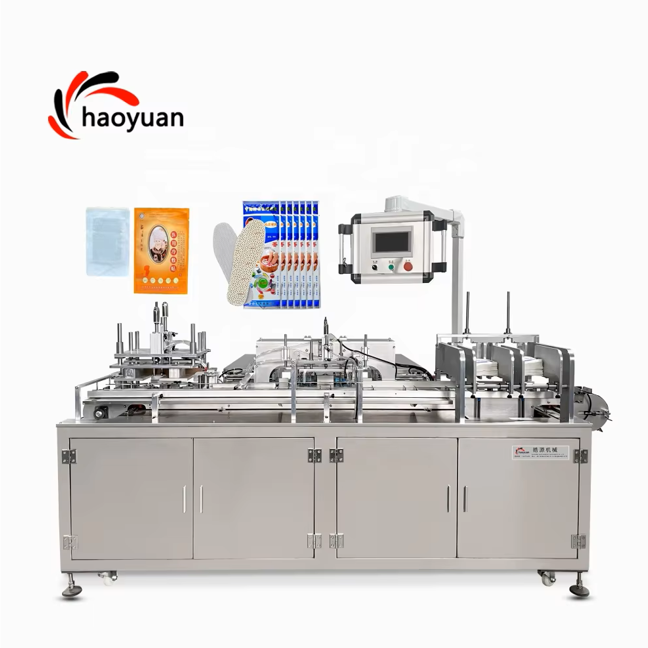
Key Carton Packing Machine Components and Their Functions
Today's carton packing machines typically include around six main components: feeding the cartons themselves, moving products along, shaping them properly, sealing everything tight, rejecting faulty units, and controlling the whole operation. The machine starts with a carton magazine that holds all those flat cardboard blanks ready to go. Vacuum suction cups then grab each one and place it exactly where needed, handling up to about 300 boxes every single minute. For keeping things lined up just right, conveyor belts work alongside optical sensors to maintain positioning accuracy within roughly half a millimeter. This kind of precision matters a lot in industries like pharmaceuticals or food packaging where even small misalignments can cause big problems down the line.
Role of PLC, Servo Motors, and Touch Screen Interfaces
The heart of modern machinery lies in Programmable Logic Controllers, or PLCs for short. These devices act like the brain controlling all sorts of movements through those fancy servo motors which can spin with incredible precision down to just 0.01 degrees. Operators love working with touch screen interfaces these days because they make things so much easier. With these Human-Machine Interfaces, switching from one box size to another takes less than ninety seconds even when dealing with twelve different sizes total. A recent study from the Automation Research Council back in 2023 showed something pretty impressive too. Machines running on PLC technology actually cut down on downtime during packaging operations by around twenty percent when compared to older systems that relied on traditional relays instead.
Integrating the Carton Packing Machine into High-Speed Production Lines
Synchronization Requirements for High-Speed Packaging Line Integration
Getting everything timed just right matters a lot when it comes to synchronization. We're talking about milliseconds here, folks. When systems aren't properly synced up, the whole operation slows down quite a bit. Some research indicates that misaligned equipment can actually cut production throughputs by as much as forty percent because those critical indexing points get missed entirely. For operations running at over twenty-five cartons per minute, the cartoning machines need to work hand in hand with both the filling stations ahead of them and the case sealing units behind. This alignment happens through these shared PLC clock signals throughout the production line. Without this kind of coordination, the entire process becomes a frustrating bottleneck rather than a smooth flowing assembly line.
Conveyor Alignment and Transfer Point Coordination for Seamless Flow
Misaligned conveyors at transfer points are responsible for 23% of unplanned downtime. Sensor-guided adjustable guide rails maintain ±1 mm positional accuracy during transfers, while self-centering belts counteract thermal expansion in continuous 24/7 operations, minimizing jams and improving flow reliability.
Timing and Indexing Strategies for Smooth Operation
Advanced motion controllers employ adaptive acceleration profiles to match downstream equipment capabilities and prevent bottlenecks. Encoder feedback loops dynamically adjust indexing intervals when line speeds fluctuate by more than 5%, keeping flap tuckers and glue applicators phase-locked during speed ramps or pauses.
Configuring the Carton Packing Machine for Variable Product and Package Sizes
Modern carton packing machines enable 15–30% faster changeovers than traditional systems when optimized for variable production demands (2023 Packaging Automation Report). This flexibility supports seasonal runs, limited editions, and custom retail packaging with minimal disruption.
Machine Setup for Different Package Sizes and Format Changeover Procedures
Modular tooling allows operators to swap folding heads and feeder mechanisms in under 10 minutes. Industry leaders report a 42% reduction in downtime using quick-release clamps and pre-calibrated sizing templates. Standardized changeover kits with numbered components enhance repeatability across shifts and operators.
Adjusting Folding and Gluing Parameters Based on Box Specifications
Five critical adjustments govern carton integrity:
- Fold depth (controlled to 0.1 mm precision via servo actuators)
- Glue quantity (dispensed with ±5% variance at 0.03 ml increments)
- Dwell time (adjusted between 0.25 and 1.5 seconds for proper adhesive curing)
Operators input material thickness into the PLC, which automatically calculates optimal settings, reducing setup errors by 67% (Corrugated Box Council, 2022).
Using Touch Screen Controls for Quick Setup of Specific Box Sizes and Configurations
HMIs with drag-and-drop interface templates allow configuration of new SKUs in less than five minutes. Graphical workflow guidance improves first-attempt success rates by 89% over manual entry methods, according to studies cited in Packaging Digest.
Data-Driven Configuration Templates for Rapid Changeover in Automatic Carton Packing Machines
Cloud-stored setup profiles enable machine reconfiguration in under 90 seconds for recurring orders. A bakery implementing template recall reduced format changeover costs from $3,200 to $470 per switch (Food Manufacturing, 2023). Machine vision validates each configuration against production specs before startup, ensuring quality and consistency.
Optimizing Performance: Speed, Efficiency, and Reliability
Balancing Production Speed and Throughput with Operational Reliability
Peak performance occurs when cycle speed and system stability are balanced. Pushing beyond 120 cartons per minute increases malfunction risk by 27% (Packaging Efficiency Report, 2023). However, advanced drive systems maintain 95% uptime at 110 cartons per minute through predictive torque monitoring and intelligent load balancing.
Packaging Efficiency Improvements Through Servo Control and Motion Profiling
Servo motors improve energy efficiency by 18–22% compared to pneumatic systems, thanks to optimized acceleration curves. Motion profiling reduces mechanical stress during carton transfers, lowering annual maintenance downtime by 35%.
Fine-Tuning Temperature, Sealing Time, and Speed Settings to Minimize Waste
Optimal glue activation occurs between 155–165°F with dwell times under 0.8 seconds, reducing adhesive overuse by 12% per shift. Real-time thermal sensors automatically adjust settings in response to ±0.2 mm variations in carton stock thickness, maintaining consistent seals.
Resolving the Speed vs. Reliability Paradox in Automated Carton Erection and Flap Kickers
Adaptive algorithms anticipate carton contact and adjust vacuum suction 0.05 seconds in advance to prevent misfeeds. Dual-stage flap kickers operating at 75 psi achieve 99.2% reliability over 12-hour production runs, even under variable environmental conditions.
FAQ
What are the main components of a carton packing machine?
The key components include a carton magazine, vacuum suction cups, conveyor belts, optical sensors, a control system, and mechanisms for feeding, moving, shaping, sealing, rejecting faulty units, and controlling operations.
How does a Programmable Logic Controller (PLC) enhance machine operations?
PLCs are crucial as they act as the brain that controls movement through servo motors with precise adjustments while minimizing downtime compared to older relay systems.
What is the benefit of integrating servomotor and linear motion systems?
Integration improves positioning accuracy, shortens format change time, and increases cycle rates significantly, enhancing overall efficiency and precision.
How do carton packing machines handle various package sizes?
They use modular tooling for quick swaps, touch screen controls for easy setup, and data-driven configuration templates for rapid changeover, supporting flexible production demands.
How is performance monitored in these systems?
Performance is monitored through PLC and HMI feedback systems, real-time performance data, and predictive analysis tools, ensuring timely maintenance and reduced downtime.
Table of Contents
- Key Carton Packing Machine Components and Their Functions
- Role of PLC, Servo Motors, and Touch Screen Interfaces
- Integrating the Carton Packing Machine into High-Speed Production Lines
-
Configuring the Carton Packing Machine for Variable Product and Package Sizes
- Machine Setup for Different Package Sizes and Format Changeover Procedures
- Adjusting Folding and Gluing Parameters Based on Box Specifications
- Using Touch Screen Controls for Quick Setup of Specific Box Sizes and Configurations
- Data-Driven Configuration Templates for Rapid Changeover in Automatic Carton Packing Machines
-
Optimizing Performance: Speed, Efficiency, and Reliability
- Balancing Production Speed and Throughput with Operational Reliability
- Packaging Efficiency Improvements Through Servo Control and Motion Profiling
- Fine-Tuning Temperature, Sealing Time, and Speed Settings to Minimize Waste
- Resolving the Speed vs. Reliability Paradox in Automated Carton Erection and Flap Kickers
-
FAQ
- What are the main components of a carton packing machine?
- How does a Programmable Logic Controller (PLC) enhance machine operations?
- What is the benefit of integrating servomotor and linear motion systems?
- How do carton packing machines handle various package sizes?
- How is performance monitored in these systems?